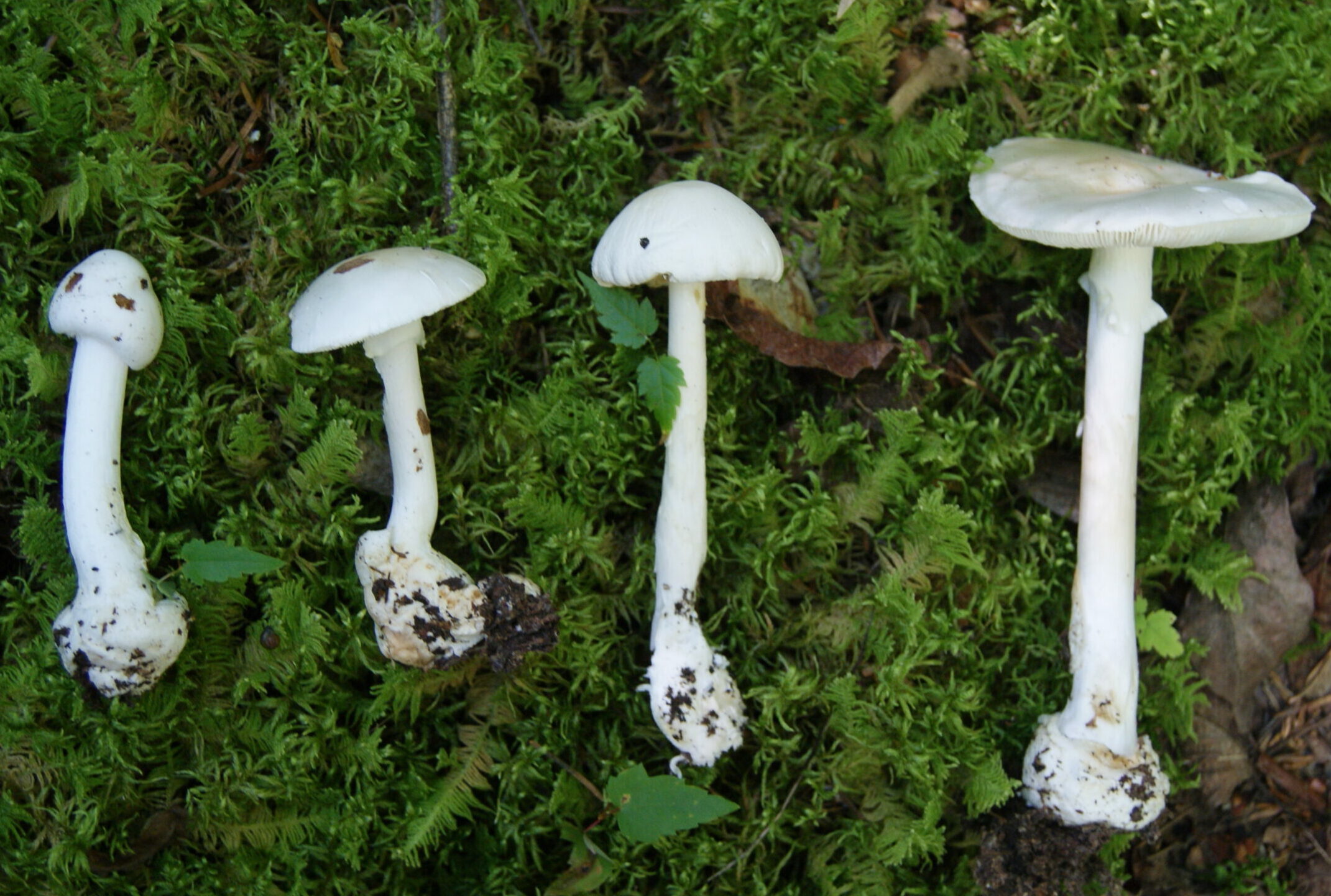
Disclaimer
The information, photos, and guidance found on this website are provided for informational purposes only and must never replace the advice of a professional mycologist for mushroom identification. Only proper training or expert confirmation by a mycologist can allow you to safely identify wild mushrooms. When in doubt, a forager should always refrain from consuming any unknown specimen.
For Your Health – PRECAUTIONS WITH WILD MUSHROOMS (French)
Poison Control Center
If a toxic product is swallowed:
- Do not induce vomiting.
- Do not attempt to neutralize the product – milk is not an antidote.
- Rinse and clean the mouth.
- Call the Quebec Poison Control Center immediately:
📞 1-800-463-5060
Toll-free phone service (24/7).
What is acute poisoning?
Acute poisoning refers to a single or repeated exposure over a short period of time involving a child or adult who:
- Swallows a hazardous product: chemicals, incorrect medication doses, drugs, toxic mushrooms, spoiled foods, etc.
- Gets a dangerous product in the eyes or on the skin.
- Inhales vapors from a toxic product.
IMPORTANT: If the person is not breathing or is unconscious, call 911.
For Your Health – POISONING FROM WILD MUSHROOMS (French)
Cooking
When consuming wild mushrooms for the first time, or trying a new species, it is strongly recommended to eat only a small quantity to test for any intolerance or allergy. Also note: all wild mushrooms must be cooked before consumption. The authors and publisher of this website cannot be held responsible for any misidentification leading to mushroom consumption.
Always consult a professional mycologist to ensure correct identification of any species you intend to eat. Also remember: mushrooms stored in poor conditions — whose flesh is dead or decomposing — can be unsafe to eat, just like any spoiled or degraded food, and may lead to food poisoning or other health issues.
IMPORTANT: Never eat raw mushrooms.
Dehydrated Mushrooms
The vast majority of dehydrated mushrooms sold in our markets are imported from abroad and repackaged in Quebec. Often, there is no traceability. With the exception of easily recognizable species like morels, it is very difficult to know exactly what kind of mushroom you’re buying. These products are responsible for a number of poisonings. The main reason behind these imports is low cost. It takes approximately 12 kg of fresh mushrooms to produce 1 kg of dehydrated mushrooms. If 1 kg of fresh mushrooms sells for $30.00, the equivalent cost for raw material is $360.00/kg, not including slicing, drying, packaging, and marketing expenses.
To purchase Quebec-grown dehydrated mushrooms, expect a higher price and make sure to deal with a reputable and conscientious local processor.
For Your Health – MUSHROOMS ON THE MARKET (French)